
Most teams treat data enrichment as a project they run once or twice a year. The problem is that B2B records decay continuously, and by the time your next cleanup runs, a big chunk of what you enriched last time is already wrong again. Setting up a proper enrichment pipeline with a REST API and webhooks is what closes that gap, and it is not as complicated as it sounds once you see how the pieces connect.
TLDR:
- B2B data accuracy erodes between 22.5% and 70% per year, making continuous enrichment infrastructure, not a one-time cleanup.
- A company enrichment REST API works by sending a domain to
GET /companies/{domain}and receiving structured JSON back in one synchronous call. - Enrichment covers four data types: firmographic, technographic, signal and event, and connection data. Map your use case before buying.
- Real-time API calls, batch jobs, and webhooks each fit different workflows. Most mature pipelines run all three together.
- PredictLeads delivers company enrichment data via API, flat files, and webhooks, covering firmographic, technographic, and event-based fields.
What Is B2B Data Enrichment?
B2B data enrichment is the process of appending missing or outdated fields to your existing company and contact records by querying a structured external dataset. When a lead lands in your CRM with only a domain and a name, enrichment pulls in the firmographic, technographic, and signal-level attributes your team needs to score, route, and personalize outreach without manual research. The external dataset does the work of crawling public sources, structuring the output, and making it queryable, so your system can append headcount, revenue range, technology stack, or recent funding rounds in a single API call. What separates enrichment from a one-time list purchase is delivery architecture: enrichment runs as a continuous layer, triggered on new record creation or on a schedule, so your data stays current instead of aging between cleanup cycles. The four main data types involved are firmographic, technographic, event-based signals, and connection data, and most enrichment pipelines draw on more than one of them depending on the use case.
Why CRM Data Decays and Why Enrichment Is Not Optional
Records go stale the moment they’re written down. People change jobs, companies rebrand, and phone numbers get reassigned – none of it waiting for your next data refresh cycle.
Research tracking B2B databases found that accuracy erodes between 22.5% and 70% per year depending on the field, with email record decay compounding above 70% annually. Job titles and contact details move faster than firmographics, but no field stays fixed for long, which means a single annual cleanup leaves most of the year running on decayed data.
Research estimates poor data quality costs organizations an average of $12.9 million per year, a figure that reframes enrichment as revenue protection against bad targeting, misrouted leads, and wasted outreach – not a tidiness exercise.
That is the case for treating enrichment as ongoing infrastructure: a pipeline that appends fresh data on a schedule, or reacts to change through a webhook, keeps pace with decay instead of falling behind it every quarter.
Types of B2B Data Enrichment
Enrichment covers several distinct data types, and mapping them to your use case first keeps you from paying for coverage you never query.
- Firmographic data: company size, revenue range, industry, headcount, and location. This is the baseline layer every enrichment pipeline starts with.
- Technographic data: evidence of which technologies a company uses, drawn from website script tags, DNS records, and job descriptions listing required tools.
- Company signals like hiring, news, and funding: funding rounds, leadership changes, product launches, and hiring surges. These are time-stamped events, not static attributes, useful for timing outreach.
- Connection data: partnerships, customer-vendor links, and investor relationships, often pulled from case studies, partner pages, and testimonials.
A lead-scoring pipeline might only need firmographic and technographic data for sales prospecting. Outbound timing needs event data on top of that.
How a Company Enrichment REST API Works
A company enrichment REST API works on a simple exchange: you send an identifier, most often a domain, and get back a structured record. That identifier hits an endpoint like GET /companies/{domain}, authenticated with an API key in the request header.
On the provider’s side, the identifier gets matched against the underlying dataset. Domain matching tends to be the most reliable path, since domains rarely change while company names and email formats drift.
The response returns as structured JSON, often following the JSON API specification, with fields carrying timestamps like first_seen_at and last_seen_at. Your system parses that payload into a CRM row, scoring model, or warehouse table. The exchange is synchronous: request, match, response, in one call, suited to the moment a lead hits your form.
Real-Time Enrichment vs. Batch Enrichment vs. Webhooks
Each delivery method fits a different workflow, and picking the wrong one leaves data stale or your API bill higher than it needs to be.
Delivery Method | Trigger | Best For | Latency | Cost per Record |
|---|---|---|---|---|
Real-time API call | New record created (e.g., form fill) | Lead routing while intent is warm | Milliseconds (synchronous) | Per-request; higher unit cost |
Batch enrichment | Scheduled job (overnight or weekly) | Warehouse backfills, CRM cleanup, large record sets | Hours to days | High; processes many records per run |
Webhooks | Signal fires on a followed account | Trigger-based outreach sequences | Near-instant (push, no polling) | Highest; no wasted requests |
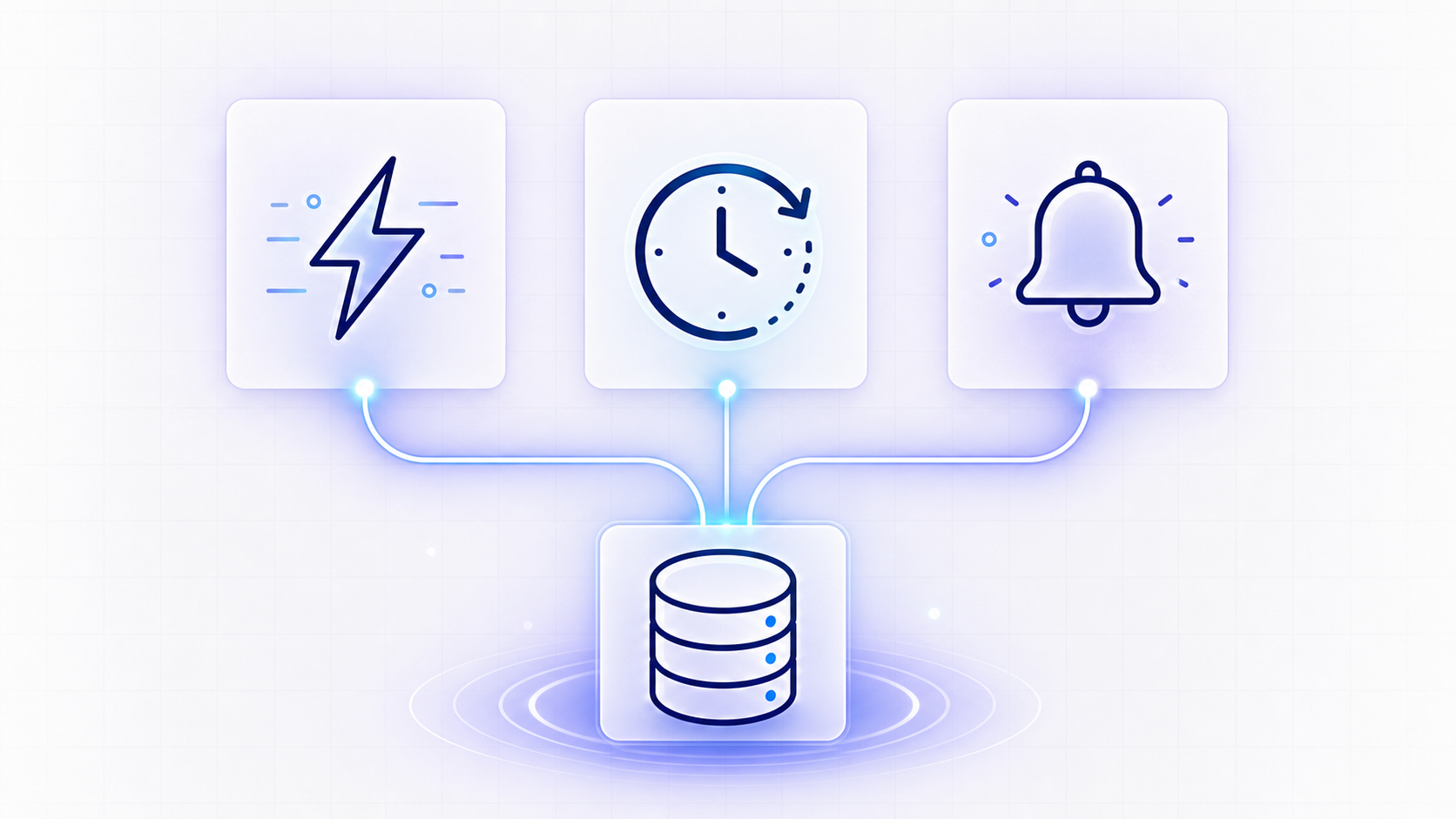
- Real-time API calls: triggered when a record is created, such as a form fill. You send the domain, get a response in the same request cycle, and route the lead while it is still warm.
- Batch enrichment: scheduled jobs that process large record sets overnight or weekly. Fits warehouse backfills, list cleanup, or re-enriching a CRM segment on a set cadence.
- Webhooks: push new data the moment a signal fires, such as a followed company posting a job opening – a job openings data API can feed these directly into CRMs. No polling, no wasted requests.
Research tracking CRM users found that 76% say less than half their organization’s data is accurate and complete, which is why architecture matters as much as provider choice. Most mature pipelines run all three together.
What a B2B Data Enrichment Pipeline Looks Like End-to-End
A pipeline is a chain, not a single API call. Skip a step and bad data usually surfaces two steps downstream.
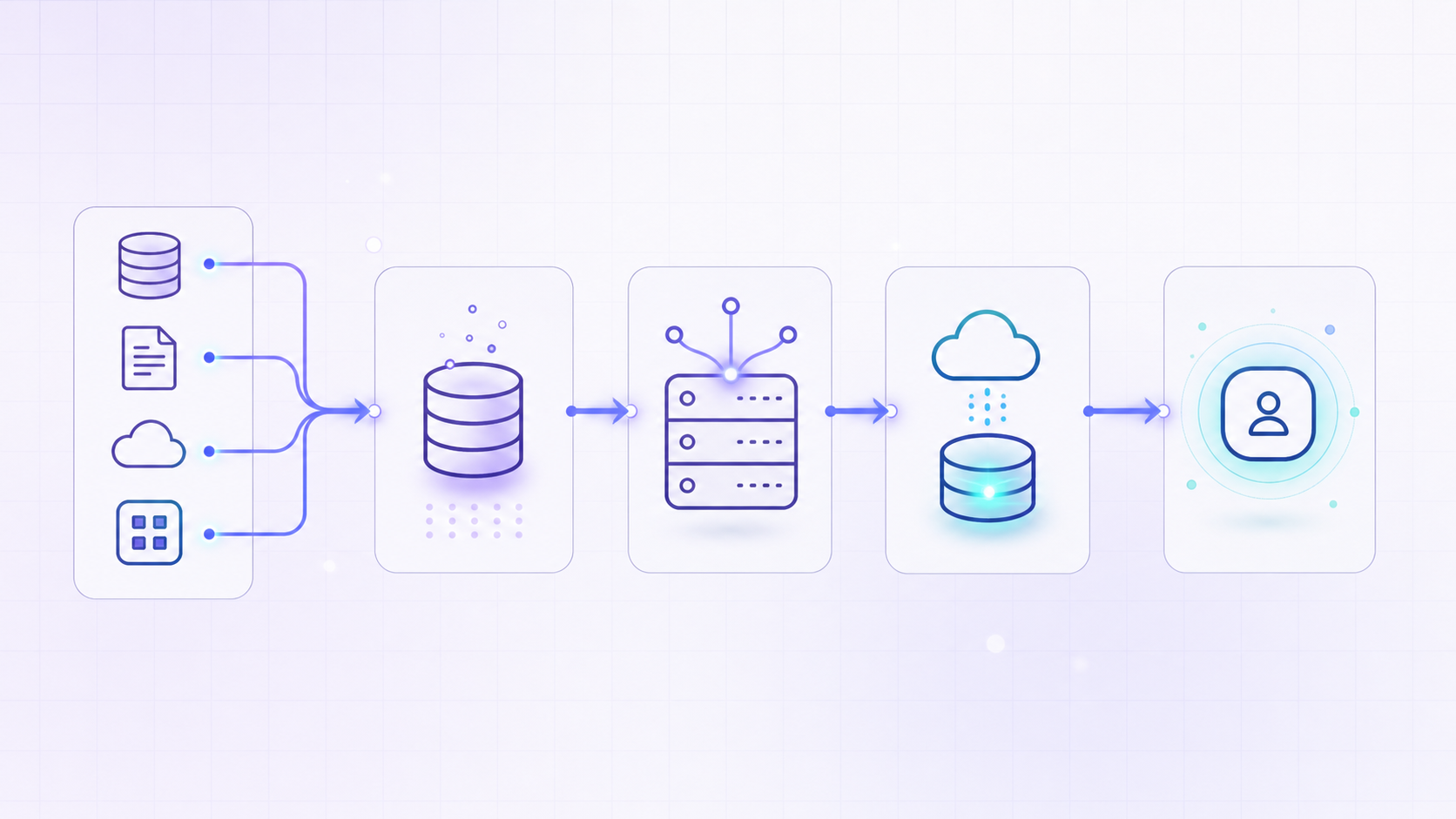
- Ingestion: raw records arrive from a form fill, CSV import, or CRM sync, giving you a name or domain and little else.
- Cleansing and deduplication: normalize domains and merge duplicate rows, since enriching a duplicate yields two incomplete profiles.
- Enrichment call: your system sends the cleaned domain to an enrichment API, which returns firmographic, technographic, or event fields.
- Write-back: enriched fields from hiring, technology, and news signals replace blank fields in the CRM or a warehouse table like Snowflake or BigQuery.
- Activation: data enrichment for prospect prioritization and segmentation logic act on the enriched record, routing leads or triggering sequences.
Flat files, REST API, and webhooks suit different parts of the pipeline: flat files suit batch ingestion, a REST API suits one-record-at-a-time enrichment, and webhooks feed activation directly.
How to Use Enrichment Data in a Lead Scoring Model
Start by separating static firmographic attributes from time-stamped signals, because the two contribute differently to a score. Firmographic fields like headcount range, revenue band, and NAICS industry code confirm whether a company fits your ICP at all: if the segment and size are wrong, no amount of signal-layer data salvages the record. Once a company clears that threshold, layer in live signals from the Job Openings, Technology Detections, and News Events datasets using the first_seen_at timestamps each record carries. A company that posted 20 or more new sales roles in the last 30 days, adopted a complementary technology in the last 90 days, and received a receives_financing news event in the last 60 days scores materially higher than a same-size peer with no recent signals, because the combination indicates both budget and active growth investment. Weight recency heavily: a hiring surge detected this month carries more signal value than one detected 9 months ago, so multiply raw signal counts by a decay factor tied to days since first_seen_at. Run this scoring logic as a scheduled batch job against your enrichment pipeline, and trigger a real-time re-score via webhook whenever a followed account fires a new qualifying event.
Key Fields Returned by a Company Enrichment API
The core layer is firmographic: domain, company name, NAICS industry codes, revenue range (expressed as low and high bounds), employee count range, location data structured by city, state, country, and continent, and a parent company reference when the record is a subsidiary. Every field carries its own first_seen_at and last_seen_at timestamps, not a single record-level update date, so you can calculate data age per attribute and discard stale fields without throwing out the whole record. On top of firmographics, a Technology Detections response returns the technology name, a confidence score, the count of unique sources confirming the detection, a behind_firewall boolean distinguishing website-visible signals from job-description evidence, and links back to the specific subpage, DNS record, or job posting that produced it. News Events responses include a normalized category from a fixed taxonomy (for example, receives_financing, increases_headcount_by, or launches), a confidence score, an amount_normalized integer in USD where applicable, and a reference to the original article with its URL, title, and published date. Job Openings add O*NET occupation codes, salary range parsed into low and high bounds with currency, seniority level, and 26 job categories, so you can score hiring velocity by role type instead of raw headcount. Taken together, these field sets let a scoring model or routing rule operate on structured evidence instead of raw text.
Assessing a B2B Enrichment API: Coverage, Freshness, and Schema Quality
Not every enrichment API covers the same ground, and gaps rarely show up until you are mid-integration. Run each provider through the same questions before signing anything.
- Coverage: does it track companies at your target size and geographies, or mostly large enterprises in a few countries? A company news events dataset is one signal type where coverage gaps are especially costly.
- Freshness: does each field carry its own timestamp, or does one “last updated” date hide which fields are current?
- Schema consistency: does every record follow the same structure, or do optional fields disappear based on what the provider found?
- Source transparency: can you trace a detection back to the subpage, job posting, or DNS record behind it?
- Match rate: test a sample of your own domains before committing. Aggregate coverage numbers mean little if your segment matches poorly.
- Delivery flexibility: does the provider offer a REST API, flat files, and webhooks, or one channel only? Reviewing how to choose a historical data provider can help you run this evaluation systematically.
How PredictLeads Delivers Company Enrichment Data
PredictLeads delivers company enrichment data across three channels: a REST API for real-time record-level lookups, flat files for bulk warehouse ingestion into Snowflake or BigQuery, and webhooks for push notifications the moment a new signal fires on a followed account. The REST API covers 129 million companies for firmographic data and 86 million domains for Technology Detections, with each field carrying its own first_seen_at and last_seen_at timestamps so your pipeline can calculate data age per attribute instead of treating the entire record as a single update. On top of firmographics and technographics, the same authenticated source returns Job Openings with O*NET codes and parsed salary ranges, News Events normalized across 37 categories, Financing Events from pre-angel through Series J, and Connections sourced from case studies, partner pages, and testimonials. Webhooks are arranged through the sales team and cover Job Openings, Technology Detections, News Events, and Connections datasets, delivering a payload to your endpoint the moment a followed company triggers a qualifying event, with no polling required. For teams building AI agent workflows, PredictLeads also exposes an MCP server at mcp.predictleads.com that lets AI systems query the same datasets as tools. You can test coverage against your own domain sample with 100 free API requests on account creation, no credit card required.
Final thoughts on Setting Up a B2B Data Enrichment Pipeline That Keeps Pace With Decay
CRM data erodes fast, and a single annual cleanup leaves most of the year running on records that no longer reflect reality. A well-built enrichment pipeline catches that decay continuously through a mix of real-time API calls, scheduled batch jobs, and signal-driven webhooks. When comparing providers, test your own domain sample first because aggregate coverage numbers rarely reflect how well a dataset matches your specific segment.
Ready to see this in your own data?
Get 100 free API requests when you create an account – no credit card, no sales call.
FAQ
What’s a good way to enrich a CRM with firmographic and technographic data via a company enrichment REST API?
Send a company domain to an endpoint like GET /companies/{domain} to pull firmographic fields such as headcount, revenue range, industry, and location, then follow that with GET /companies/{domain}/technology_detections to retrieve technographic evidence from script tags, DNS records, and job descriptions. Write the enriched fields back to your CRM on record creation for real-time fills, and run a scheduled batch job weekly to re-enrich stale rows. PredictLeads covers 131 million companies for firmographics and 86 million domains for technographics, so both layers return from a single authenticated source.
How do I build a lead scoring model using company growth signals from a B2B data enrichment pipeline?
Pull hiring velocity from the Job Openings dataset, recent financing rounds from Financing Events, and technology adoption changes from Technology Detections, then weight each signal by recency using the first_seen_at timestamps each record carries. A company posting 20 or more new roles in 30 days while showing a fresh receives_financing news event scores higher than one with static headcount and no recent signals. Running this logic as a scheduled batch job against your enrichment pipeline keeps scores current without manual review.
What are the best data sources for identifying newly funded startups to prospect?
A dedicated Financing Events dataset that normalizes round types from pre-angel through Series J, including bridge rounds, corporate rounds, and grants, gives you the most actionable signal because you can filter by financing type, amount, and company location in a single API call. PredictLeads covers 203,960 or more financing events since 2016 and detects roughly 2,700 new events per month. Pairing that with a B2B enrichment webhook means your CRM receives a push notification the moment a followed company closes a round, so outreach goes out while the budget is still fresh.
Should I use real-time API calls, batch enrichment, or a B2B enrichment webhook for my data pipeline?
Use real-time API calls when a new record arrives, such as a form fill, and you need the enriched firmographic or technographic fields before routing the lead. Run batch jobs overnight or weekly for warehouse backfills and CRM cleanup across large record sets. Set up webhooks for trigger-based workflows where timing matters, such as firing an outreach sequence the moment a followed company posts a relevant job opening or announces a partnership. Most mature pipelines run all three in combination because each pattern solves a different latency and cost tradeoff.
How do I assess a B2B data enrichment API for coverage and schema quality before signing a contract?
Test a sample of 200 to 300 of your own domains against the provider’s API before committing, because aggregate coverage numbers can mask poor match rates in your specific segment. Check whether each field carries its own first_seen_at and last_seen_at timestamps instead of a single record-level update date, since field-level timestamps are what let you calculate data age per attribute. Ask whether technology detections link back to the source URL, DNS record, or job posting that produced the detection, because source transparency is the only way to audit a detection’s reliability instead of taking the match on faith.